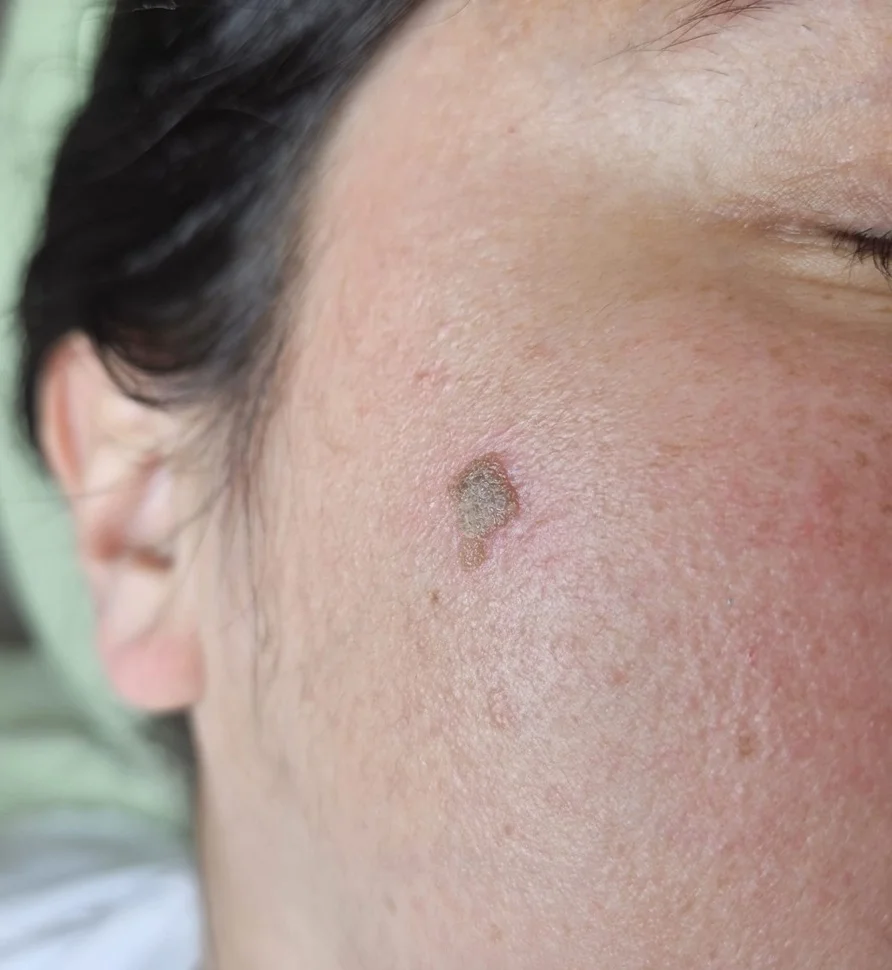
Skin Tags on the Neck and Under the Arms: Why They Show Up Exactly There
Why skin tags cluster on the neck, underarms and under the bra line, what makes them catch and bleed, and when a snagged tag needs a doctor instead of a clinic.
There is a specific moment that brings most people to a skin tag removal appointment, and it is almost never the day they first noticed the tag.
It is the day the necklace caught it. Or the razor. Or the bra strap, on the third hot afternoon in a row. The tag itself might have been sitting there for four years, ignored. What changed is that it started to hurt.
If yours are on your neck, your underarms, or under the bra line, you are in the most common territory there is. Here is why those places, and what to do about it.
Friction is the pattern
Skin tags are strongly associated with skin rubbing against skin, or against fabric. That single fact explains almost the entire map of where they turn up:
- The sides and back of the neck — collars, necklaces, hair, seatbelts, shaving
- The underarms — arm movement, sleeves, shaving
- Under the breasts and along the bra line — the underwire and band sit in the same place for twelve hours a day
- The groin and inner thighs — walking, waistbands
- The eyelids — blinking, rubbing, glasses
It also explains something people find more surprising: skin tags tend to arrive in regions rather than as single events. If you have one on the right side of your neck, the odds are decent that you have two more you have not looked for on the left.
Why they start bothering you years later
A skin tag has a narrow stalk. That is the whole problem.
Anything with a stalk can be caught, twisted or pulled in a way that a flat spot cannot. So a tag that sat quietly on the back of your neck for years becomes a daily irritation the moment your habits change — a new necklace you wear constantly, a work collar that sits differently, a switch from clipping your hair up to wearing it down.
Nothing about the tag changed. The friction did.
That is worth saying plainly because people often assume a tag that suddenly bothers them must be becoming something. Usually it has just been found.
When it bleeds
This is the question we get most often about the neck and underarm areas, and the answer splits cleanly in two.
Normal: you caught it with a razor, a fingernail, a towel or a zip, and it bled. Skin tags have a small blood supply and can bleed more than their size suggests. Gentle pressure with a clean cloth until it stops is the right response.
Not for us: a spot that bleeds without being caught. Or one that is dark, irregular, growing, changing colour or shape, painful, or simply does not look like your other spots.
That second list is a medical question. Vicaria’s practitioners are not licensed physicians or dermatologists in Ontario and we do not diagnose skin conditions, so those go to a doctor first, not to us. A cosmetic appointment is the wrong first step for an uncertain lesion, and no webpage can sort one from the other.
What removal actually involves in these areas
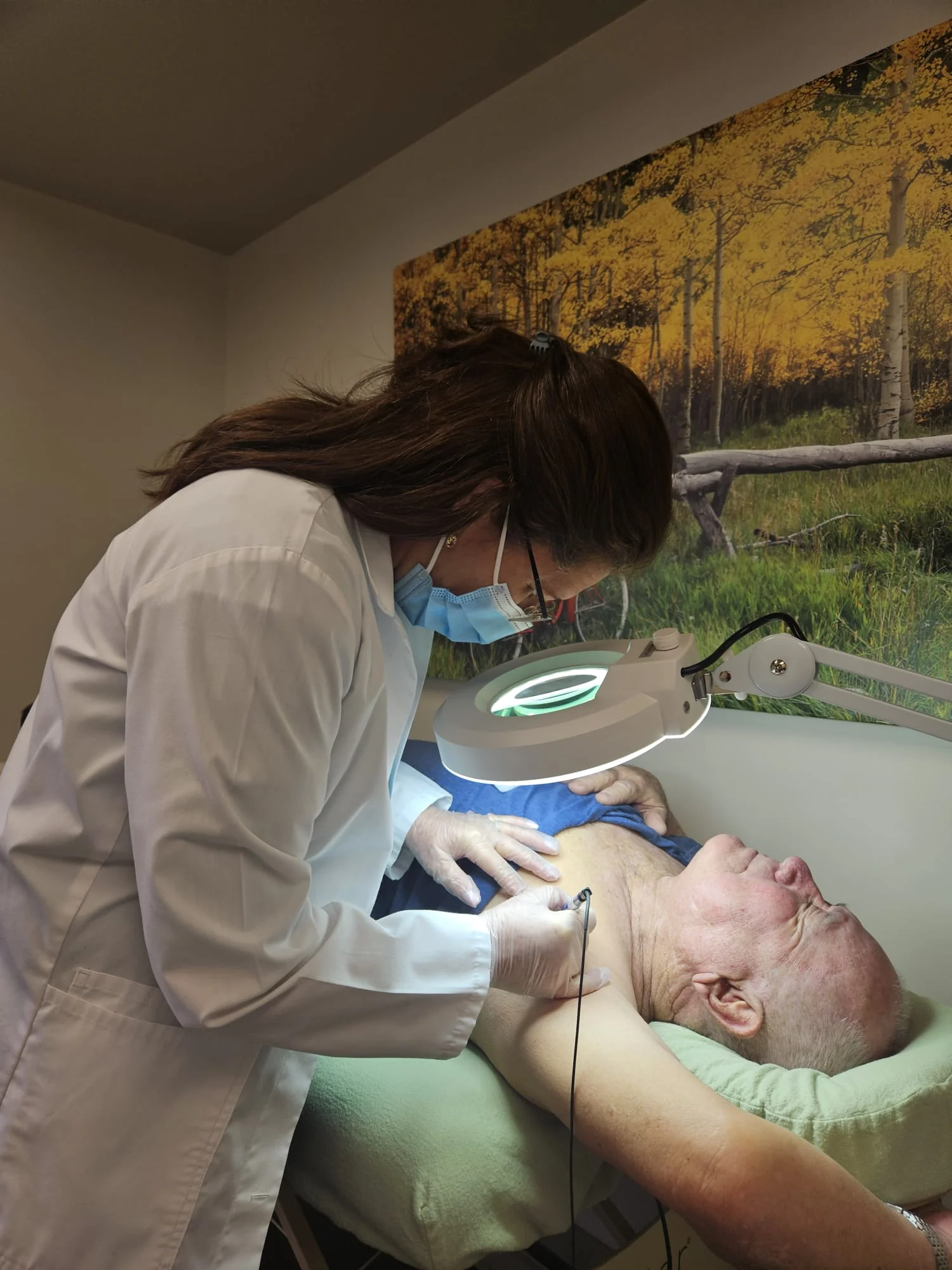
For a familiar skin tag in a suitable location, we use electrocautery — controlled heat applied to a small treatment area, which removes the tag and seals as it goes.
The neck and underarm are, in practice, straightforward areas to treat. They are accessible, the skin is forgiving, and clusters can usually be handled in one sitting. Most people describe a brief warm pinch per tag.
The eyelid is the exception in this list. The eyelid and the skin immediately around the eye need particular caution, and depending on the exact location we may direct you to a licensed physician or eye-care professional instead of treating it here. If your tags are near the eye, say so on the phone and we will tell you honestly whether it is something we should be doing.
What you should expect afterwards: temporary redness, often a small scab that falls off on its own, and written aftercare instructions. Healing time and cosmetic results vary, and scarring, pigment change, bleeding and infection are all possible outcomes we go through with you beforehand.
Cost, since nobody else publishes it
- Free 15-minute phone or WhatsApp consultation
- In-person consultation: $60 CAD + tax
- Treatment: from $20 CAD + tax per lesion, by size and location
The consultation fee is charged once, not per tag, which is why bringing the whole cluster to one appointment usually works out better. We confirm the total before anything starts. For the full picture on pricing and why OHIP generally does not cover this, see our cost and coverage guide.
If you are in Hamilton
Vicaria is at Unit 2B, 144 James St S in downtown Hamilton, and we see clients from Ancaster, Dundas, Stoney Creek, Waterdown, Burlington and Grimsby.
Start with the free 15-minute conversation: tell us roughly how many, where, and how long they have been there. If there is anything uncertain in the description, we will tell you to see a doctor first — that is a normal outcome of that call, not a failed one.
Call (365) 336-9757, message us on WhatsApp, or read more about cosmetic skin tag removal.
Important: for a changing, bleeding, painful, dark, irregular or uncertain lesion, consult a licensed physician or dermatologist before booking cosmetic removal.
Services that fit this topic
Frequently Asked Questions
Why do I only get skin tags on my neck?
The sides and back of the neck are one of the highest-friction areas on the body. Collars, necklaces, hair, seatbelts and shaving all pass over the same few centimetres of skin every day. Skin tags are strongly associated with that kind of repeated rubbing, which is why the neck, underarms, groin and under-breast area account for most of what we see.
Can I cut or tie off a skin tag on my neck myself?
Please don't. Tying or cutting can cause bleeding that is harder to stop than people expect, plus infection, scarring and pigment change. The neck also sits close enough to structures you cannot see that improvising is a bad idea. If it needs to go, have it done with sterile technique and aftercare.
My skin tag bled when I caught it with a razor. Should I worry?
A tag that bleeds because you snagged it is common and usually settles with gentle pressure from a clean cloth. What deserves attention is a spot that bleeds without being caught, or one that is dark, irregular, growing or changing. That is a medical assessment, and it should come before any cosmetic appointment.
Does deodorant or shaving cause underarm skin tags?
Neither is a proven cause. The link is friction, and shaving contributes to that mechanically rather than chemically. Plenty of people who have never shaved get underarm tags, and plenty who shave daily never do.
How many can you remove in one appointment?
Usually several. Pricing is per lesion, but the consultation fee is not repeated, so a cluster in one region is generally more economical to address together. We confirm the expected total before starting.
Yamilet Pina and Maurin Casella are certified health coaches (IIN). This content is educational and does not replace medical advice. If you have a medical condition, please consult your healthcare provider.