Skin Tag, Wart or Mole? What Each One Looks Like, and When to See a Doctor
How a skin tag, a wart and a mole usually differ in texture, shape and behaviour, why the difference changes what treatment makes sense, and which signs need a doctor.
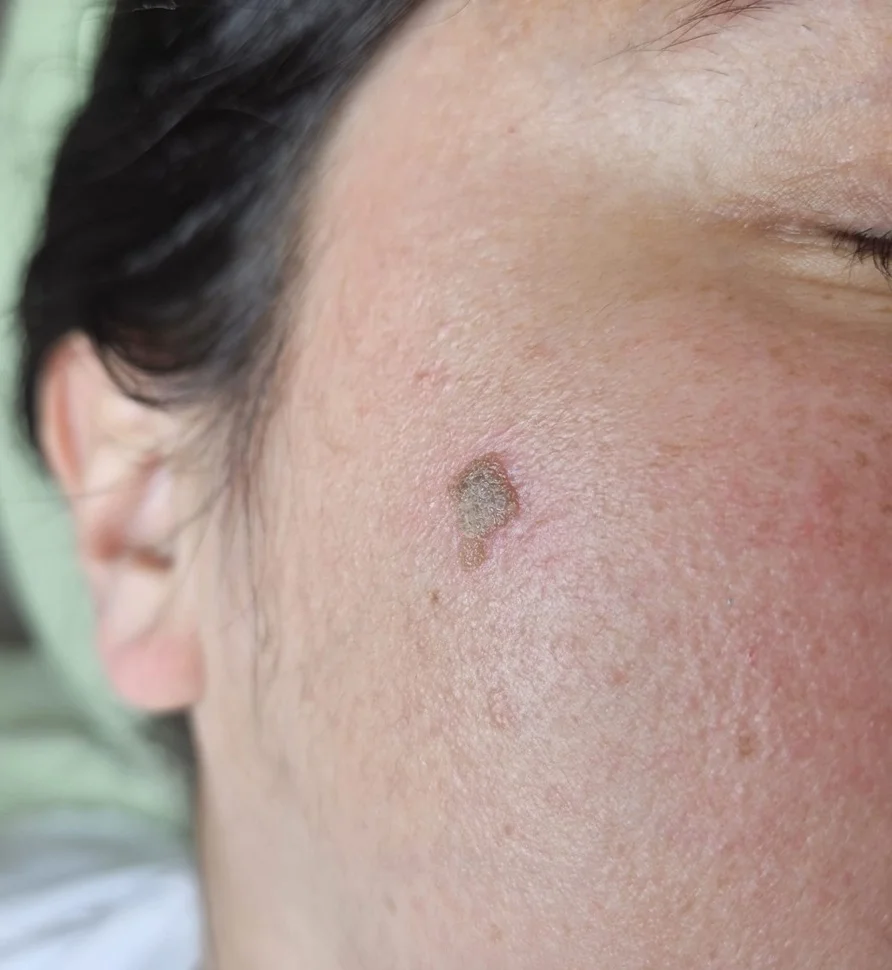
Most people who message us about skin tag removal do not start with “I have a skin tag.” They start with a question.
Is this a skin tag? It might be a mole. Or a wart? It looks weird.
That uncertainty is reasonable, and it is the most important part of the whole decision. A skin tag, a wart and a mole can all show up as “a small bump I would like gone”, but they are different things, they respond to different treatments, and one of them is the reason dermatologists keep telling people not to remove anything at home.
So here is how they usually differ. Usually is doing a lot of work in that sentence, and we will come back to it.
The short version
| Skin tag | Wart | Mole | |
|---|---|---|---|
| Feel | Soft, squishy | Firm, rough | Smooth, flat or soft dome |
| Shape | Hangs from a narrow stalk | Sits on a broad base | Round or oval, even edges |
| Colour | Skin-coloured or a little darker | Skin-coloured, greyish, sometimes tiny dark dots | Tan to dark brown |
| Where | Neck, underarms, bra line, groin, eyelids | Hands, fingers, feet, knees | Anywhere |
| Cause | Friction, genetics, age, hormones | A virus (HPV) | Pigment cells clustering |
| Spreads? | No | Can | No |
Skin tags: soft, on a stalk, where things rub
A skin tag is a small piece of normal skin attached by a thin stalk. The stalk is the giveaway: if you can gently lift it and it moves like a tiny flap, that is the classic picture.
They cluster where skin rubs skin or fabric. The sides of the neck, the underarms, under the breasts, the groin and the eyelids account for almost all of them, and they tend to arrive in groups. We explain why they show up exactly there in a separate post.
Skin tags are not infectious and are benign. They bother people because they catch on necklaces, razors and bra straps, not because they are dangerous.
Warts: rough, broad, and caused by a virus
A common wart is skin that a virus, human papillomavirus, has pushed into overgrowing. That gives it a different texture: firm, rough, sometimes cauliflower-like, and sitting flat on a broad base rather than hanging from a stalk.
Two details help. Many common warts show tiny black or dark red dots, which are small clotted blood vessels. And warts on the soles of the feet grow inward under pressure, which is why they can feel like a stone in your shoe. We wrote about why plantar warts resist drugstore kits.
Because warts are viral, they can spread, to other parts of your skin or to other people. Shaving over one or picking at it is how a single wart on a knee becomes five.
Moles: the one where change is the signal
A mole is a cluster of pigment-producing cells. Most are tan to brown, round or oval, with even edges, and they stay much the same for years.
Some moles are raised and soft, and those are the ones people mistake for skin tags. The difference that matters is not texture. It is behaviour over time.
The warning signs doctors use for moles are often taught as ABCDE:
- Asymmetry: the two halves do not match
- Border: ragged, notched or blurred edges
- Colour: several shades, or black, red, white or blue patches
- Diameter: larger than about 6 mm, the size of a pencil eraser
- Evolving: changing in size, shape, colour, height, or starting to itch or bleed
Any of those is a reason to see your family doctor or a dermatologist. Not a cosmetic clinic, and definitely not a freeze pen.
Why “usually” matters so much
Everything above describes typical patterns. Real skin does not always read the textbook:
- A soft raised mole can look like a skin tag.
- A flat wart on the face can look like nothing in particular.
- A seborrheic keratosis, the waxy “stuck-on” brown growth common after 40, can look like a wart or a mole.
- And occasionally something that looks like an ordinary skin tag is not one.
That last point is the reason we will not tell you what your spot is. Vicaria does not diagnose skin conditions. Our practitioners are certified health coaches trained in cosmetic lesion removal, and we are not licensed physicians or dermatologists in Ontario. A webpage cannot diagnose a lesion either, and neither can a photo sent over WhatsApp.
What this guide can do is help you notice which side of the line you are on.
The signs that mean doctor first
Whatever you think it is, see a licensed physician or dermatologist before any removal if the spot is:
- New in adulthood and growing
- Changing in size, shape, colour or height
- Dark, black, or several colours
- Bleeding without being caught or scratched
- Painful, itchy or crusting without a reason
- Different from your other spots, the “ugly duckling”
- Near the eye or on the genitals
If you have a concern about a lesion and no family doctor, Ontario’s Health811 line can help you work out where to go.
Why the difference changes what you should do
This is not only a safety question. It also decides whether anything will work.
Drugstore wart treatments are built for warts: thick, viral tissue. On a skin tag, which is ordinary skin, salicylic acid and freeze pens mostly irritate the healthy skin around it. A removal band can work on a skin tag’s stalk and does nothing useful on a wart’s broad base. We break down what each drugstore kit actually does.
And on a mole, every home method destroys the tissue a doctor would have wanted to look at.
If it is a familiar skin tag or wart
If your doctor has already told you it is a skin tag or a common wart and you would just like it gone, Vicaria offers cosmetic skin tag removal and wart removal at Unit 2B, 144 James St S in downtown Hamilton.
- Free 15-minute phone or WhatsApp consultation
- In-person consultation: $60 CAD + tax
- Treatment: from $20 CAD + tax per lesion, by size and location
Several spots in one area are usually handled in one appointment, and the consultation fee is charged once. If anything in your description sounds uncertain on the call, we will tell you to see a doctor first. That is a normal outcome of the call, not a failed one.
Call (365) 336-9757 or message us on WhatsApp.
Important: this guide describes typical patterns and does not diagnose. A new, changing, bleeding, painful, dark, irregular or uncertain spot should be assessed by a licensed physician or dermatologist before any cosmetic removal.
Services that fit this topic
Frequently Asked Questions
How can I tell a skin tag from a wart?
Typically, a skin tag is soft, smooth, skin-coloured or slightly darker, and hangs from a thin stalk so it moves when you touch it. A wart is typically firm, rough or cauliflower-like on the surface, sits flat against the skin on a broad base, and may show tiny dark dots. Those are patterns, not proof. If you cannot tell, a physician can.
How do I know if it's a skin tag or a mole?
Moles are made of pigment cells and are usually tan, brown or darker, flat or dome-shaped, and present for years. Skin tags are usually flesh-coloured flaps on a stalk. Some moles are soft and raised, which is where people get confused. A mole that is changing in size, shape or colour, or looks different from your other moles, needs a doctor, not a cosmetic clinic.
Are warts contagious but skin tags are not?
Yes. Common warts are caused by human papillomavirus and can spread to other areas of your skin or to other people through direct contact. Skin tags are not infectious. That is one reason not to pick at or shave over something you are unsure about.
Can a skin tag turn into cancer?
Skin tags are benign and are not generally considered to become cancerous. The real risk is the other way round: something that is not a skin tag being mistaken for one. That is why dermatologists warn against cutting, freezing or burning off any growth you have not had looked at.
Can Vicaria tell me what my spot is?
No. Our practitioners are certified health coaches trained in cosmetic lesion removal, not licensed physicians or dermatologists, and we do not diagnose skin conditions. On the free call we can tell you whether a description sounds like something to raise with your doctor before any cosmetic appointment.
Yamilet Pina and Maurin Casella are certified health coaches (IIN). This content is educational and does not replace medical advice. If you have a medical condition, please consult your healthcare provider.