Skin Tag Removal Kits, Creams and Freeze Pens: What Each One Actually Does
A clinic's honest breakdown of drugstore skin tag kits, removal creams, freeze pens and Compound W — what they were designed for, and what happens on the wrong lesion.
There is an aisle in every Shoppers Drug Mart that is doing a lot of unearned business.
It contains freeze pens, medicated patches, removal bands, and tubes of cream, and it is arranged as if all of those things treat one condition. They do not. Most of them were designed for warts, and a wart has almost nothing in common with a skin tag except that both of them are bumps you would rather not have.
We see the results of that mismatch every week. So here is what each category actually does, written by people who have no financial interest in you buying any of it — and one honest recommendation for the case where the aisle is right.
The thing the packaging cannot tell you
Before any of the products, the actual problem with self-treatment: you have to be right about what it is.
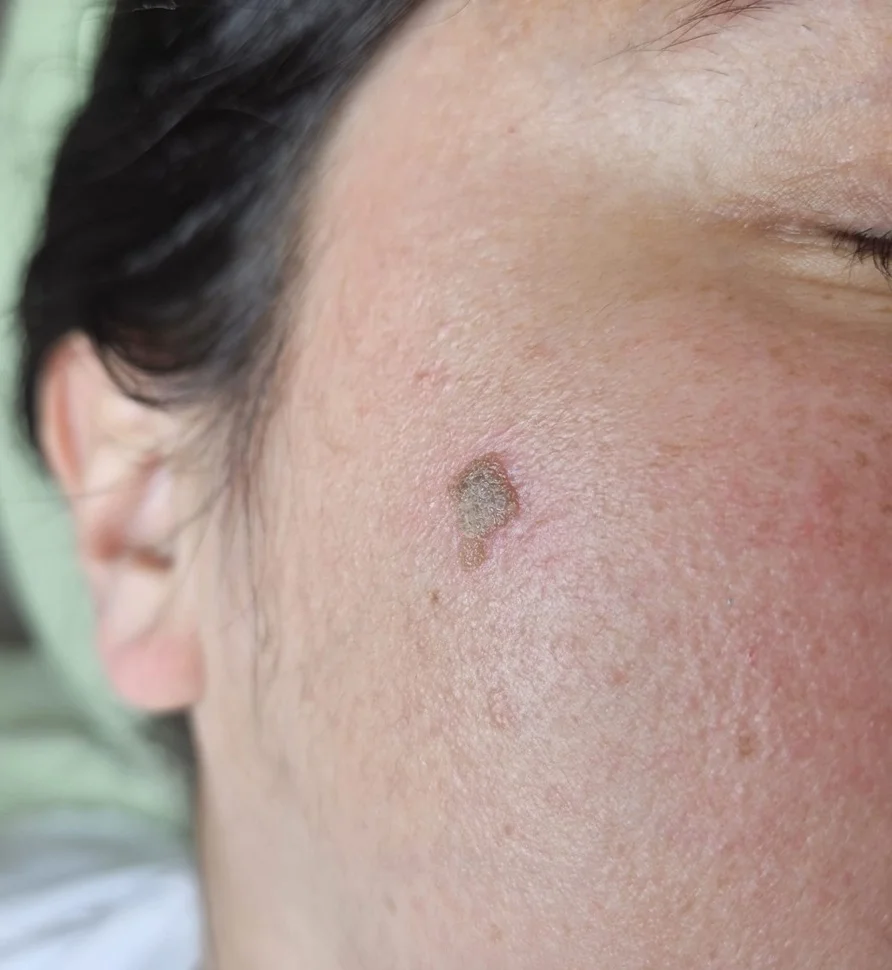
A skin tag, a wart, a cherry angioma, a seborrheic keratosis, a milium and a mole can all present as “a small bump I want gone”. They respond to completely different treatments. And one item on that list is the reason dermatologists ask you not to destroy lesions at home: if a spot ever needed assessing, burning or freezing it off removes the thing a doctor would have wanted to see.
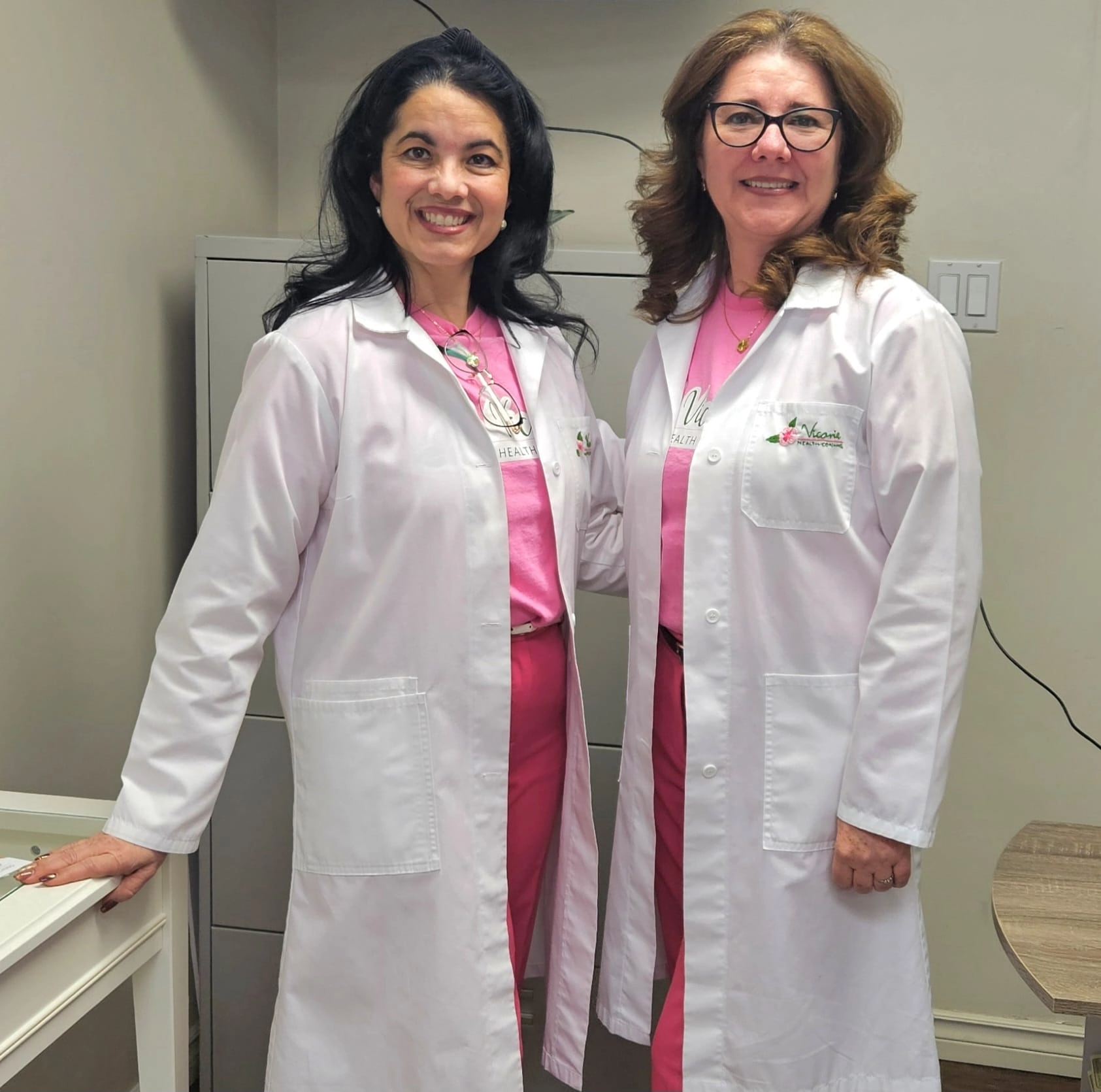
Vicaria does not diagnose skin conditions either — our practitioners are not licensed physicians or dermatologists in Ontario. The difference is that we say so and refer, rather than selling you a pen.
Salicylic acid patches, gels and Compound W
Designed for: warts.
Why it makes sense there: a wart is thickened, virally altered tissue. Salicylic acid breaks down keratin, so applied daily over weeks — with the softened dead layer filed back between applications — it grinds the wart down from the surface. This genuinely works for a lot of people. It is slow and boring, which is the real reason it fails.
Why it fails on a skin tag: a skin tag is normal skin. There is no thickened abnormal tissue for the acid to preferentially attack, so it treats the tag and the healthy skin around it about equally. The usual outcome is an irritated, sore patch of neck with the tag still firmly attached.
On a seborrheic keratosis: better than on a skin tag, worse than on a wart. It may thin the surface of a waxy growth, but these lesions frequently extend further than the visible top, so people describe it flattening and then coming back.
Freeze pens and home cryotherapy kits
Designed for: warts, again.
The two problems: depth and aim.
Clinical cryotherapy reaches a lower temperature than the home versions. That gap matters most on thick skin, which is why home kits underperform on foot warts in particular — we wrote about why plantar warts resist everything.
Aim is the bigger issue on a face or neck. A raised stalked lesion sits above the skin, so a cold applicator pressed against it contacts the surrounding skin at the same time. Freezing normal skin causes a blister and can leave a pale patch where the pigment cells did not recover. On darker skin tones that pale mark is often more noticeable than the original tag.
Never near the eye. The manufacturers say this on their own packaging, and they are right.
Plasma pens and skin tag “zappers”
Designed for: selling well on TikTok and Instagram.
These are the handheld devices sold as “plasma pens”, “mole removal pens” or skin tag zappers. They produce a small electrical arc that burns the tissue it touches. In other words, they are an unregulated, consumer version of the heat-based removal a clinic does with controlled equipment.
The problem is not the idea of heat. It is everything around it:
- No control over depth. Too shallow and the tag stays; too deep and you have a burn that scars or leaves a pale or dark patch.
- No sterile technique or aftercare plan. A burn on the neck or underarm, in a friction area, is an easy wound to infect.
- The same identification problem as everything else in this post. Burning off a spot destroys the tissue a doctor would have needed to see if it was not a skin tag.
Dermatologists who post about skin tags single these out by name and ask people not to buy them. We agree. If you have already used one and it left a mark, let it heal fully before deciding on anything else.
It is also worth knowing that the US Food and Drug Administration has said there are no FDA-approved over-the-counter products for removing moles or skin tags, and in 2022 it warned companies selling unapproved removal creams and serums after reports of injuries and scarring. That warning is a few years old, and the products are still marketed.
Removal bands and “tying it off”
Designed for: skin tags, actually.
This is the one category whose mechanism matches the anatomy. A skin tag has a narrow stalk carrying its blood supply, and cutting that off will eventually kill the tag. The idea is not absurd.
The problems are practical:
- Bleeding. Tags bleed more than their size suggests, and a partially detached tag on the back of your neck is awkward to manage alone.
- Infection. A band held against skin for days, in a friction area, in summer.
- You cannot see what you are doing. Most tags people want removed are somewhere they need a mirror and a second hand for.
- Wrong lesion, worse outcome. A band tightened around something that is not a stalked skin tag does damage without achieving anything.
Cutting one off with nail scissors is the version of this we would most like people to stop doing. It is the single most common reason someone arrives with an infected, scarred patch instead of a skin tag.
Vicks, apple cider vinegar, tea tree oil, duct tape
Designed for: none of this.
There is no reliable evidence for any of these on skin tags, cherry angiomas or seborrheic keratoses. Duct tape has a small and much-argued-about literature for warts specifically, and it is at least harmless.
Apple cider vinegar is the one we would actively warn about. It is acidic enough to burn skin, people leave it on far too long precisely because nothing is happening, and the burn is reliably larger than the lesion. Tea tree oil causes contact dermatitis in a meaningful minority of people.
“Seborrheic keratosis removal with Vicks” is a real search with real volume, which is a good illustration of how much of this is people looking for permission from the internet rather than information.
So what should you actually do
If it is a wart on a hand or foot: try salicylic acid properly first. Daily, for six to twelve weeks, filing the dead layer back. That is a reasonable and cheap first attempt, and if it fails after that much consistency, then come and see someone.
If you are not certain what it is: see a physician before you treat anything. Especially if it is changing, dark, irregular, bleeding on its own, or unlike your other spots.
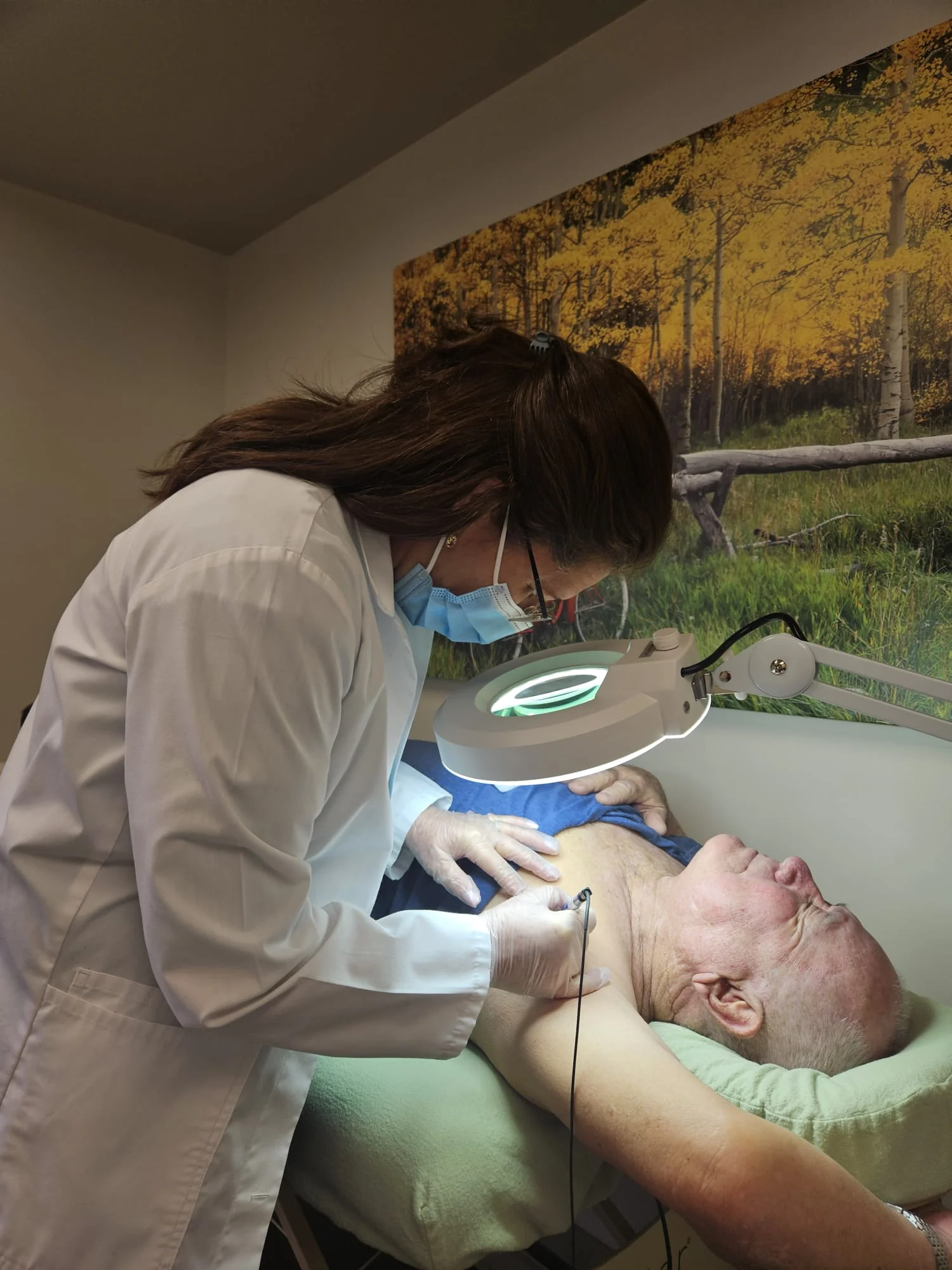
If it is a familiar skin tag, cherry angioma or waxy growth and you just want it gone: that is a fifteen-minute appointment, and the reason people do not book it is almost always that they assume it is expensive or complicated.
- Free 15-minute phone or WhatsApp consultation
- In-person consultation: $60 CAD + tax
- Treatment: from $20 CAD + tax per lesion, by size and location
Several lesions in one region are usually handled in a single appointment, and the consultation fee is charged once. That is often less than what people have already spent working through the aisle. The full cost and OHIP picture is here.
Booking in Hamilton
Vicaria offers skin tag removal and wart removal at Unit 2B, 144 James St S in downtown Hamilton, serving Ancaster, Dundas, Stoney Creek, Waterdown, Burlington and Grimsby.
If you have already tried something from the aisle and it left a mark, let it heal first, then tell us what happened. We would rather hear it than not.
Call (365) 336-9757 or message us on WhatsApp.
Important: never freeze, burn, cut or acid-treat a lesion you are unsure about, and never treat anything near your eye at home. For a changing, bleeding, painful, dark or irregular spot, see a licensed physician or dermatologist first.
Services that fit this topic
Frequently Asked Questions
Do skin tag removal kits work?
Removal bands sometimes do remove a stalked tag, because cutting off blood supply is a mechanism that matches the anatomy. Freeze pens and salicylic acid products generally do not, because they were designed for warts on thick skin. None of them can tell whether what you are treating is actually a skin tag, which is the part that matters most.
Can I use Compound W on a skin tag?
Compound W is a salicylic acid wart treatment. It is formulated to break down the thickened viral tissue of a wart. A skin tag is ordinary skin, so the acid works on the tag and on the healthy skin around it more or less equally. That is why people end up with an irritated patch and the tag still attached.
Is it safe to freeze a skin tag off at home?
Home freeze pens reach a shallower depth than clinical cryotherapy and they are not precise. On a raised stalked lesion you are as likely to freeze the surrounding skin. Never use one near the eye, and never on a lesion you are not certain about — freezing destroys the tissue that a doctor would have wanted to look at.
Are plasma pens or skin tag zappers safe to use at home?
We would not use one. They burn tissue with a small electrical arc, with no control over depth, no sterile technique and no aftercare plan, so burns, infection, scarring and pigment change are the realistic risks. They also destroy the lesion, which matters if it was not a skin tag. The FDA has said no over-the-counter product is approved for removing skin tags or moles.
What about Vicks, apple cider vinegar or tea tree oil?
There is no reliable evidence for any of them on skin tags, cherry angiomas or seborrheic keratoses. Apple cider vinegar is acidic enough to burn skin, and the burns we see are usually larger than the lesion. Tea tree oil causes contact dermatitis in a fair number of people.
When does over-the-counter actually make sense?
Salicylic acid on a hand or foot wart, used daily for six to twelve weeks with the dead layer filed back between applications, is a genuinely reasonable first attempt. That is the one case in the aisle where the product and the problem line up.
I already tried a kit and it left a mark. What now?
Keep it clean and let it settle. If it is spreading, weeping, increasingly painful, or not improving over a couple of weeks, see a physician rather than a cosmetic clinic. Once healed, we can look at what is left and tell you whether it is suitable for cosmetic treatment.
Yamilet Pina and Maurin Casella are certified health coaches (IIN). This content is educational and does not replace medical advice. If you have a medical condition, please consult your healthcare provider.