What Electrocautery Actually Feels Like, and How Your Skin Heals Afterwards
Electrocautery is how most skin tags, cherry angiomas, warts and seborrheic keratoses are removed cosmetically. What it is, what you feel, the scab timeline day by day, aftercare, and who should mention something first.
Most people who book a skin tag or cherry angioma removal with us have one question they are slightly embarrassed to ask: is it going to hurt? The second question, usually asked a week later on WhatsApp, is “is this scab normal?”
Both are good questions. Here is what electrocautery is, what it actually feels like, and what your skin does over the following weeks.
What electrocautery is
In cosmetic skin removal, electrocautery means using a fine-tipped probe that delivers a small amount of controlled heat to a precise spot. The heat seals and dries out the tissue being treated, which is then removed or left to come away as a scab.
It is not the same as the “zapper” or “plasma pen” sold online. Those devices are often hard to control and are used at home on skin you can’t see well, which is how people end up with burns. We explain why in what skin tag removal kits actually do.
It is the technique Vicaria uses for:
- Skin tags
- Cherry angiomas (ruby points)
- Seborrheic keratoses
- Warts, where suitable
- Sebaceous hyperplasia
Milia are usually handled differently, by gentle extraction rather than heat.
What it actually feels like
A brief warm sting or pinch on each spot is how most people describe it. For a small skin tag or a pinpoint angioma it lasts a second or two. Larger or flatter spots take a little longer.
A few things people don’t expect:
- The smell. There is often a faint singed smell, like a hair touching a candle. It is normal, and it does not mean anything has gone wrong.
- How quick it is. Several small spots can be done in a few minutes. Most of an appointment is talking, checking and cleaning, not treatment.
- Sensitive areas are more sensitive. Necks and underarms tend to be easy. Eyelids, the upper lip and areas over bone can feel sharper. Topical numbing can be used for those.
- The anticipation is worse. This is the most common comment we hear afterwards, by a wide margin.
You are awake, you can talk, and you can ask for a pause at any point.
Healing, week by week
Every person and every spot heals a little differently, and your aftercare instructions come first. But this is the typical pattern for small spots:
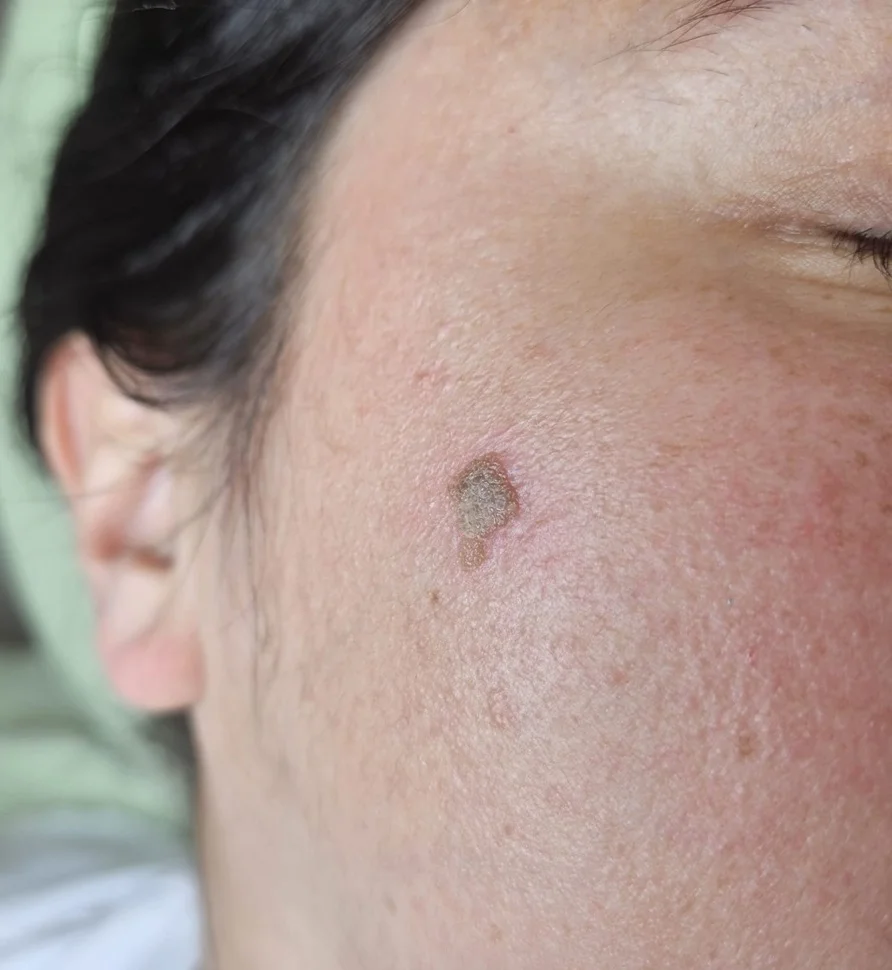
The first day. The treated spot is pink or slightly red and may feel mildly tender, like a small scrape. A tiny bit of oozing can happen.
Days 2 to 7. A small dark crust or scab forms where the spot was. This is the normal part that worries people the most. It is supposed to be there.
Week 1 to 2. The scab falls off by itself. Spots on the face often go faster, closer to a week. Body, legs and larger spots can take two weeks or a little longer.
The following weeks to months. Underneath is new pink skin, which gradually settles to your normal tone. In some people, especially those with darker skin, the site can heal lighter or darker for a while, and occasionally that change lasts.
Aftercare that helps
Common guidance, which your practitioner will tailor to you:
- Keep it clean. Wash gently with mild soap and water, pat dry.
- Keep it lightly moisturised with plain petroleum jelly while it heals. Moist wounds heal better than dry, cracked ones.
- Don’t pick the scab. This is the single biggest cause of a worse mark. Let it fall off.
- Avoid friction on the area where you can: tight collars, bra straps, a necklace over a neck spot.
- Swimming and hot tubs are best avoided until it has closed.
- Sunscreen on the healed mark for the next few months helps stop it darkening.
Call your practitioner or a doctor if the area becomes increasingly red, swollen, hot or painful after the first day or two, oozes pus, or you develop a fever. Those are signs of infection, which is uncommon but possible.
The honest list of risks
Electrocautery is a well-established technique, but no procedure is risk-free, and we would rather you heard it here than later.
- Scarring. Many small spots heal to the point you can’t find them, but a small scar is possible, more so with larger spots and with picking.
- Pigment change. Lighter or darker skin at the site, more common on darker skin tones. Usually temporary, not always.
- Keloids. People prone to raised, thick scars can form them after any skin injury, including this one.
- Infection. Uncommon, and less likely with good aftercare.
- Regrowth or new spots. Treating a spot does not change the tendency to form them, so new ones can appear over time, and occasionally a treated spot returns.
Tell us first if any of these apply
Mention these before treatment, not after:
- A pacemaker, implanted defibrillator or other implanted electronic device. This needs to be assessed before any electrical treatment, and some cases belong in a medical setting.
- Blood thinners or a bleeding disorder.
- Diabetes, poor circulation or slow wound healing.
- A history of keloids or raised scars.
- Pregnancy.
- Any spot that is new, changing, bleeding on its own or one you are unsure about.
That last point matters most. Electrocautery is a removal technique, not a way to find out what a spot is. Vicaria does not diagnose skin conditions, and our practitioners are not licensed physicians or dermatologists in Ontario. A spot that is new, changing, irregular, dark or bleeding needs a licensed physician or dermatologist first, before anyone removes it cosmetically.
Booking in Hamilton
Vicaria offers cosmetic electrocautery removal at Unit 2B, 144 James St S in downtown Hamilton, serving Ancaster, Dundas, Stoney Creek, Waterdown, Burlington and Grimsby.
- A visit: $99, HST included, covering the in-person consultation and the first spot
- Each extra spot in the same visit: $20
- Never more than $299 a visit, however many spots, whatever the size or where on the body
Three spots come to $139, five to $179. You can also try the skin removal cost calculator for your own mix.
Call (365) 336-9757 or message us on WhatsApp.
Important: a spot that is new, changing, dark, irregular, bleeding on its own or painful should be assessed by a licensed physician or dermatologist before any cosmetic removal. Tell your practitioner about any implanted electronic device before electrocautery.
Services that fit this topic
Yamilet Pina and Maurin Casella are certified health coaches (IIN). This content is educational and does not replace medical advice. If you have a medical condition, please consult your healthcare provider.