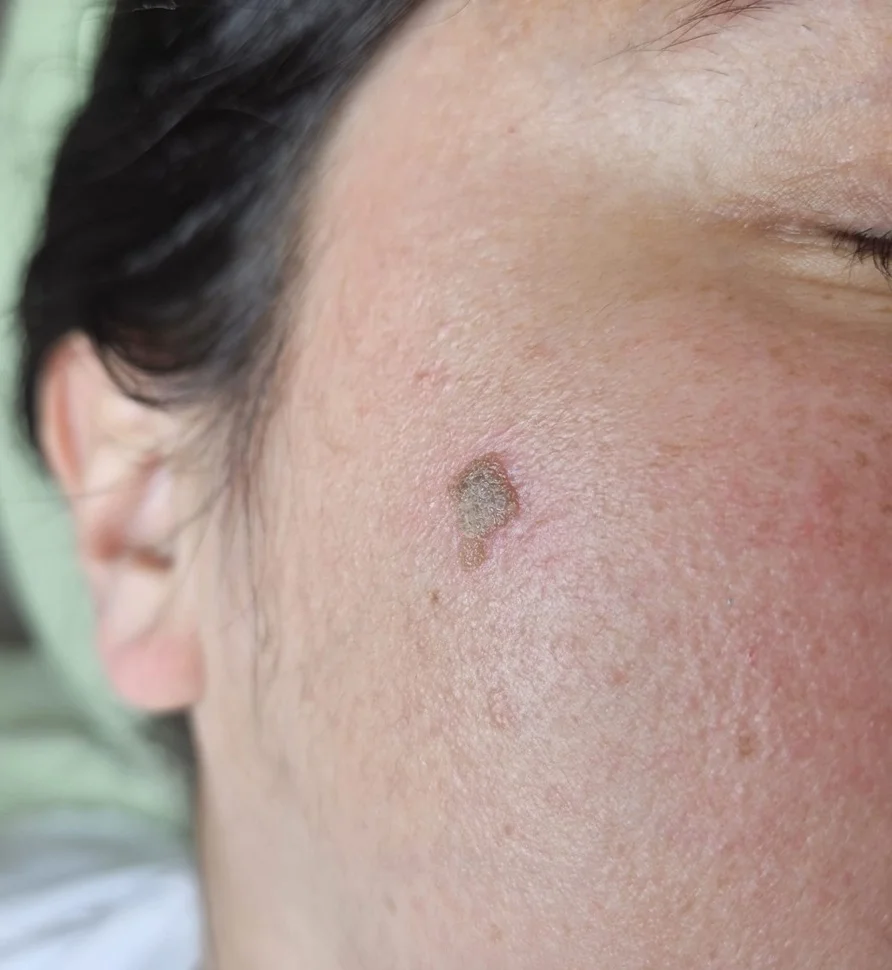
Why You Keep Getting Skin Tags (And What They Might Be Telling You)
What causes skin tags, why some people grow dozens, and the well-documented link between multiple skin tags and insulin resistance worth raising with your doctor.

Most people who come to us for skin tag removal do not have one skin tag.
They have four on one side of the neck, a couple under each arm, some along the bra line, and a suspicion — usually unspoken until the end of the appointment — that this is not just bad luck. That something is going on.
That instinct is worth taking seriously. Not because skin tags are dangerous, because they generally are not. But because there is a genuine pattern behind who gets a lot of them, and it is the kind of thing worth raising with your doctor rather than only with a cosmetic clinic.
I spent two decades in medicine before I did this work, so let me be careful about the difference between what is well established, what is associated, and what nobody can tell from looking at your neck.
The straightforward causes
Skin tags are benign growths of normal skin. Four things reliably show up in why they appear:
Friction. The single clearest factor. Skin rubbing against skin or fabric — collars, necklaces, bra bands, waistbands, underarms, inner thighs. It explains almost the entire map of where they turn up.
Genetics. If your mother has them, your odds are considerably higher. Some people simply produce them, in places with no meaningful friction at all.
Age. Uncommon in your twenties, unremarkable in your fifties.
Hormonal change. Pregnancy in particular. A lot of people notice their first ones during or just after a pregnancy, and many of those stay.
None of that is alarming, and for a lot of people the list stops there. Friction plus family history plus fifty years is a complete explanation.
The part worth taking to your doctor
Here is where I want to be precise, because this topic attracts a lot of overreach online.
Multiple skin tags are consistently associated with insulin resistance and with the wider cluster of things often called metabolic syndrome. This shows up repeatedly in dermatology research, and it is the reason a doctor might glance twice at someone who has developed a lot of them quickly.
Now the limits of that statement, which matter more than the statement:
- It is an association, not a cause-and-effect finding.
- It is not a diagnosis. A skin tag cannot tell you your blood sugar. Neither can a photo, a webpage, or a cosmetic consultation.
- Plenty of people with entirely normal metabolic health have skin tags, particularly where genetics and friction explain them.
- Vicaria does not diagnose anything. Our practitioners are not licensed physicians or dermatologists in Ontario.
So what is it actually good for? One thing: it is a small, cheap prompt. If you have developed a number of skin tags and you have not had fasting glucose and A1C checked in a while, mention it at your next appointment and ask for the bloodwork. That is a normal request, it is covered, and it is the only step that produces an actual answer.
There is a related sign worth knowing while you are looking. Acanthosis nigricans — velvety darkened patches, usually in the same friction areas, most often the back of the neck and the armpits — has a stronger association with insulin resistance than skin tags do. If you have both, that is a more definite reason to get the blood test. It is also not something we treat; it goes to your doctor.
If the numbers do come back off
This is the part where the two halves of what we do actually meet, so I will be straightforward about it.
If your bloodwork lands in the prediabetes range, the tags on your neck are the least interesting thing about that result. Prediabetes is where nutrition and daily habits have the most leverage of any point in the whole progression, and it is the part of medicine I found most frustrating as a physician — the appointment where you get a number, a leaflet, and a follow-up in a year.
That is the gap Vicaria’s coaching side exists for: prediabetes nutrition support and, further along, diabetes coaching. If you want the longer explanation of what insulin resistance actually is and why the usual advice underperforms, I wrote about it here.
To be clear about the boundary: that is a separate service from removing your skin tags, and you are under no obligation to be interested in it. Plenty of people come in, have six tags removed, and leave. That is a perfectly good appointment.
What removal does and does not change
Removal deals with the lesions that get treated. It does not change friction, genetics, age, hormones or metabolic health, which means new tags can still appear in the same region or elsewhere over time. Healing and recurrence vary from person to person, and no cosmetic procedure can promise that future lesions will not develop.
The reverse is not established either. You may have seen the claim that fixing your insulin makes existing skin tags dry up and fall off; we looked at what the evidence actually shows, and it is a lot less than the videos suggest.
That is not a disclaimer to skim. It is the reason we would rather you understood the pattern than left thinking one appointment ended it.
What removal is genuinely good for: the tag that catches on your collar every morning stops catching on your collar. For most people that is the entire goal, and it is a reasonable one.
- Free 15-minute phone or WhatsApp consultation
- In-person consultation: $60 CAD + tax
- Treatment: from $20 CAD + tax per lesion, by size and location
Clusters are usually handled in one appointment, and the consultation fee is charged once. See the full cost and OHIP guide or the skin tag removal service page.
Booking in Hamilton
Vicaria is at Unit 2B, 144 James St S in downtown Hamilton, serving Ancaster, Dundas, Stoney Creek, Waterdown, Burlington and Grimsby.
If you have a lot of these and you are wondering whether it means something, the honest sequence is: ask your family doctor for the bloodwork, and book the removal because the tags annoy you. Those are two separate reasons and they both stand on their own.
Call (365) 336-9757 or message us on WhatsApp.
Important: a spot that is new, changing, bleeding on its own, painful, dark, irregular, or unlike your other spots should be assessed by a licensed physician or dermatologist before any cosmetic removal.
Services that fit this topic
Frequently Asked Questions
What causes skin tags?
The main drivers are friction where skin rubs skin or fabric, genetics, increasing age, higher body weight, and hormonal change such as pregnancy. That combination is why they cluster on the neck, underarms, groin and under the bra line, and why they tend to arrive in groups rather than one at a time.
Do skin tags mean I have diabetes?
No. Having multiple skin tags is associated with insulin resistance in a fair amount of research, but association is not diagnosis and plenty of people with normal blood sugar have them. Vicaria does not diagnose anything. Treat it as one small reason among many to have your fasting glucose and A1C checked by your family doctor, not as an answer.
Why do I get new ones after having some removed?
Removal deals with the lesions treated, not with the reasons they formed. If friction, genetics and metabolic factors are unchanged, new tags can appear in the same region or elsewhere over time. No cosmetic procedure can guarantee that future lesions will not develop.
Did pregnancy cause mine?
Pregnancy is a recognised trigger, and many people first notice skin tags during or shortly after one. Some settle afterwards and many do not. They are not a sign that anything went wrong.
Can losing weight make them go away?
Existing skin tags do not generally disappear with weight loss. What can change is how many new ones form, since body weight and insulin resistance are both part of the picture. That is a slow, indirect effect and a poor reason to lose weight on its own — but a real one among others.
Yamilet Pina and Maurin Casella are certified health coaches (IIN). This content is educational and does not replace medical advice. If you have a medical condition, please consult your healthcare provider.