Milia Under the Eyes and on the Eyelids: Why They Gather There, and Why Not to Squeeze
Tiny white bumps under the eyes and on the lids are very often milia. Why the eye area collects them, what makes them worse, why squeezing fails, and where cosmetic removal stops and an eye doctor starts.

They are tiny, firm and white, like a grain of sand caught under the skin. Two under one eye, three on the other lid, one that has been there so long you have stopped seeing it, until you put on concealer and it shows through.
If that sounds familiar, it is very likely milia, and the eye area is where they tend to collect. We have a general guide to getting rid of milia. This one is specifically about the ones under the eyes and on the lids, because that is where most of the questions, and most of the bad home attempts, happen.
What milia are
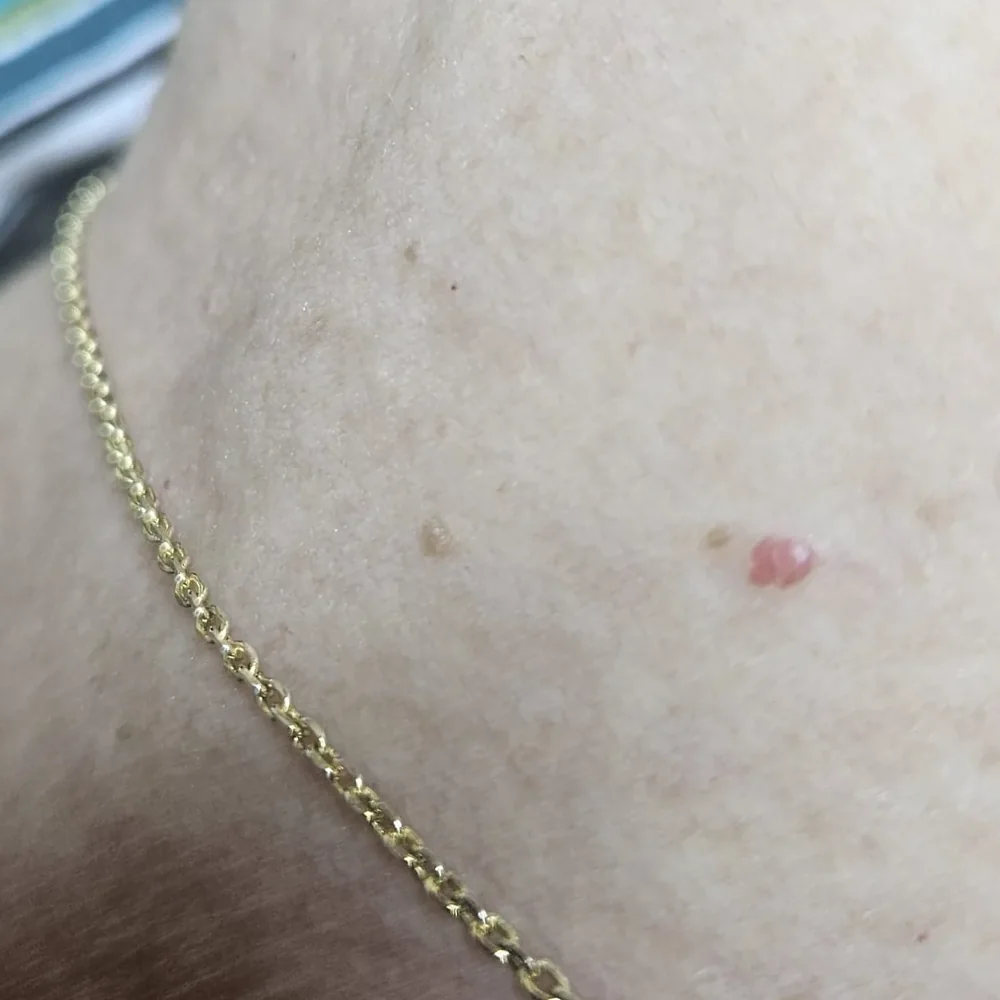
A milium (one milia bump) is a tiny cyst filled with keratin, the protein your outer skin is made of. Instead of shedding normally, a little keratin gets trapped just under the surface and forms a hard, pearly ball.
The usual features:
- White or slightly yellowish, one to two millimetres across
- Firm, like a little bead, not soft
- Not red or sore around them
- No visible opening on top
- They stay the same for months, sometimes years
Why the eye area collects them
The skin under the eyes and on the lids is the thinnest skin on your face, and it renews itself slowly. That alone makes it a natural place for keratin to get stuck. A few things make it more likely:
- Rich eye creams. Heavy, occlusive products applied to thin skin every night can contribute. If you started a new eye cream and milia followed, it is a reasonable suspect.
- Sun damage. Years of sun exposure thicken and roughen the outer skin, which makes trapping easier.
- Skin that has been irritated or injured. Milia often appear after blistering, burns, peels, laser resurfacing or a rash in the area. These are called secondary milia.
- Steroid creams used on the face for long periods.
- Nothing in particular. Many people simply get them, at any age.
Babies are a separate story. Milia on a newborn’s nose and cheeks are very common and usually clear on their own within a few weeks. They need nothing done to them.
Why squeezing does not work
This is the part we wish more people knew before they tried.
A pimple has an opening, so pressure pushes its contents out. A milium has no opening. Squeezing just presses on the surrounding skin, and around the eye that skin bruises within seconds. Most people who try end up with a red, swollen patch and the bump still exactly where it was.
Using a needle or pin at home is the next step people take, and it is the one we would stop. You are making an opening millimetres from your eye, without sterile tools, in skin that scars and infects easily, often while looking in a mirror at an awkward angle.
What does help at home is limited and slow. Gentle retinoid products can help some milia work their way out over months, but they can irritate the eye area, so ask a pharmacist or doctor before using one there. Switching to a lighter eye cream and wearing sunscreen may reduce new ones.
Things around the eyes that are not milia
The eye area is crowded with look-alikes, and most of them should not be treated like milia:
- Syringomas. Small, skin-coloured or yellowish, slightly flat bumps under the eyes, often in clusters. They are sweat-duct growths, not keratin cysts, and cannot be extracted like milia.
- Xanthelasma. Flat, soft, yellowish patches, usually near the inner corner of the eyes. They are cholesterol deposits, and a doctor may want to check your cholesterol. We cover them in yellow patches around the eyes.
- Sebaceous hyperplasia. Soft, domed, yellowish bumps with a small dip in the middle, more on the forehead and cheeks. See white bumps on the face that are not acne.
- Styes and chalazia. Tender, swollen lumps on the lid, usually near the lash line. An infection or blocked gland, and a matter for a doctor.
- Skin tags. Soft, fleshy and hanging, not firm and white. Eyelid skin tags have their own rules, explained in a skin tag on your eyelid.
Vicaria does not diagnose skin conditions. Our practitioners are not licensed physicians or dermatologists in Ontario. If you are not sure what a bump is, if it is tender, growing, changing or bleeding, see a licensed physician or dermatologist first.
Where cosmetic removal stops around the eye
We would rather be precise than vague here.
We may be able to help with familiar milia on the under-eye skin and the outer eyelid skin, clearly away from the lash line, when you are not uncertain about what they are.
We will send you elsewhere when the bump is on or near the lash line or the rim of the lid, on the inner surface of the lid, close to the tear duct, tender or inflamed, changing, or when there is any real doubt about what it is. Depending on the location, that referral is to a physician, a dermatologist or an eye-care professional.
What removal involves
For milia that suit our cosmetic service, removal is a small, careful procedure. A tiny opening is made in the surface over each milium with a sterile instrument and the keratin is gently extracted. Around the eyes we work slowly, and you can stop us at any point.
Most people feel a brief prick. Afterwards there are small red marks where each one was, which usually settle within a few days. Wait about 24 hours before eye makeup so the openings can close. Bruising, scarring and pigment change are possible, and we go through those risks with you before treatment. Removing milia does not stop new ones forming, especially if the cause, such as a heavy eye cream, is still there.
Milia removal in Hamilton
Vicaria offers cosmetic milia removal at Unit 2B, 144 James St S in downtown Hamilton, serving Ancaster, Dundas, Stoney Creek, Waterdown, Burlington and Grimsby.
- A visit: $99, HST included, covering the in-person consultation and the first milium
- Each extra one in the same visit: $20
- Never more than $299 a visit, however many
Under-eye milia often come in clusters: five come to $179, and from 11 the visit stays at $299. If you would rather check first whether yours look like something we treat, send a photo on WhatsApp.
Call (365) 336-9757 or message us on WhatsApp.
Important: any bump on or near the lash line, the inner eyelid or the tear duct, and any spot around the eyes that is tender, growing, changing or uncertain, should be assessed by a licensed physician, dermatologist or eye-care professional before any cosmetic removal.
Services that fit this topic
Yamilet Pina and Maurin Casella are certified health coaches (IIN). This content is educational and does not replace medical advice. If you have a medical condition, please consult your healthcare provider.