How to Get Rid of Milia: Why Creams Never Work on Those Tiny White Bumps
Why no cream, scrub or retinol removes milia, what actually gets them out, why they cluster under the eyes, and how to tell them apart from whiteheads.

Most people in Hamilton who book a milia consultation arrive with the same story. They noticed a small white bump on their cheekbone, or under the eye, or along the temple. They assumed it was a whitehead and tried to squeeze it. Nothing came out. They tried again a few days later. Still nothing. They left it alone for a few weeks, then a few months. It’s still there.
That is the classic milia experience. And it’s one of the most common reasons people come in to our clinic.
This guide explains what milia actually are, why home tools don’t work on them, what professional removal looks like in Hamilton, and how to tell milia apart from the half-dozen other small bumps that can show up on a face.
What milia actually are
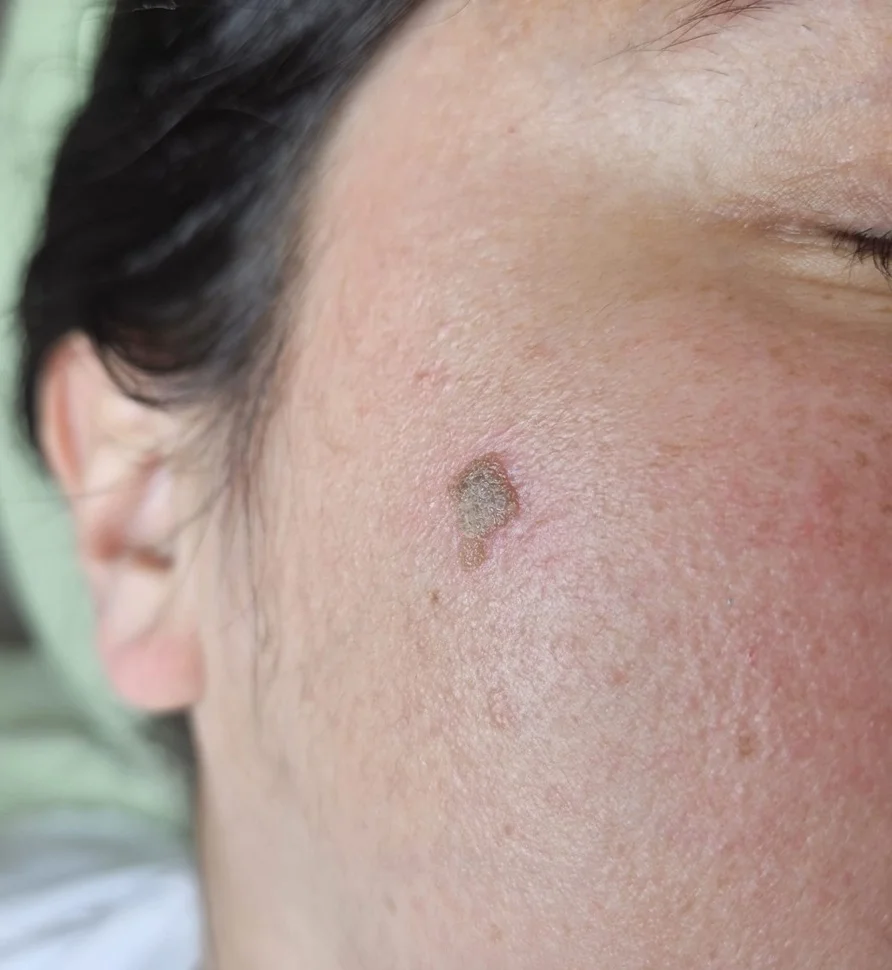
A milium (plural: milia) is a tiny, dome-shaped cyst that forms when keratin — the protein your skin uses to renew itself — gets trapped just under the surface. The trap is the key word. There is no opening to the outside, no path for the contents to exit. It’s a closed cyst.
That’s different from a whitehead, which is an open pore with a plug. A whitehead has a route out, which is why a hot compress and gentle pressure sometimes work. A milium has no route. You can press on it until your face is sore and nothing changes.
Milia are most common on:
- the cheekbones and under-eye area
- the temples
- the bridge of the nose
- the upper lip
- the forehead, especially right at the hairline
In adults, they tend to appear after the skin has been exposed to something occlusive — a thick night cream, a sunscreen that didn’t suit you, a recovery balm after a procedure, even a long stretch of wearing heavy makeup over the same area.
Why nothing in your bathroom is going to fix them
This is the part that frustrates people most. Walk into a Shoppers Drug Mart on Upper James and you can find a dozen products that claim to “exfoliate” or “dissolve” small white bumps. They don’t work on milia. Here’s why.
- Salicylic acid works inside an open pore. Milia are closed. The acid never reaches the keratin.
- Retinol speeds up cell turnover. That can sometimes prevent new milia from forming, but it cannot break into a cyst that has already sealed.
- Physical exfoliants (scrubs, brushes, washcloths) abrade the surface. A milium sits below the surface. You can scrub for months and find it untouched.
- Hot compresses soften the skin. There’s no opening for softening to help.
The only reliable way to remove an existing milium is to make a tiny opening in the surface above it and lift the keratin out. That has to be done with a sterile instrument by someone trained to do it without scarring. It is genuinely fast — most milia take less than ten seconds each — and the discomfort is minor. But it is not something you should try with a sewing needle in your bathroom. We see those results too, and they are rarely better than the original problem.
What removal looks like at Vicaria
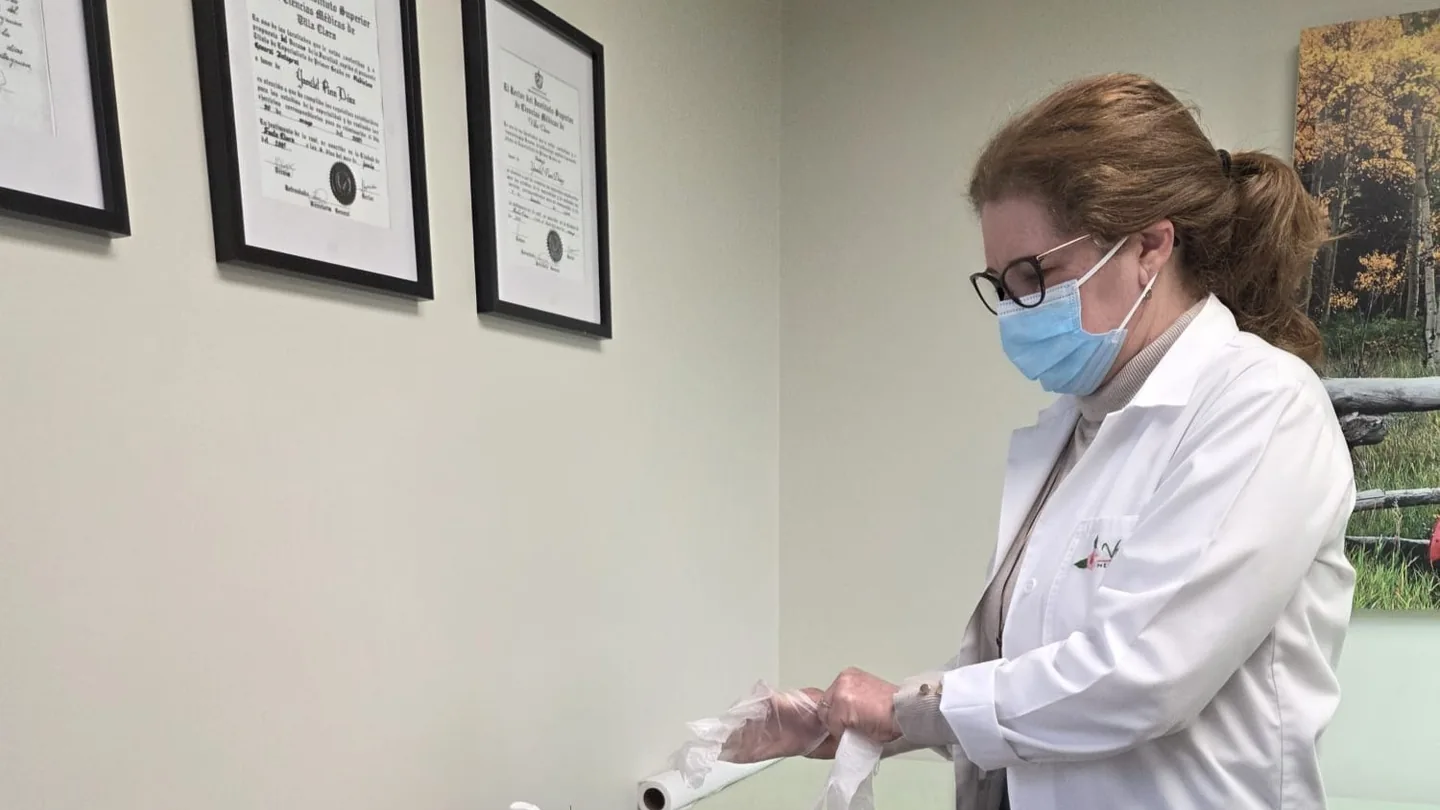
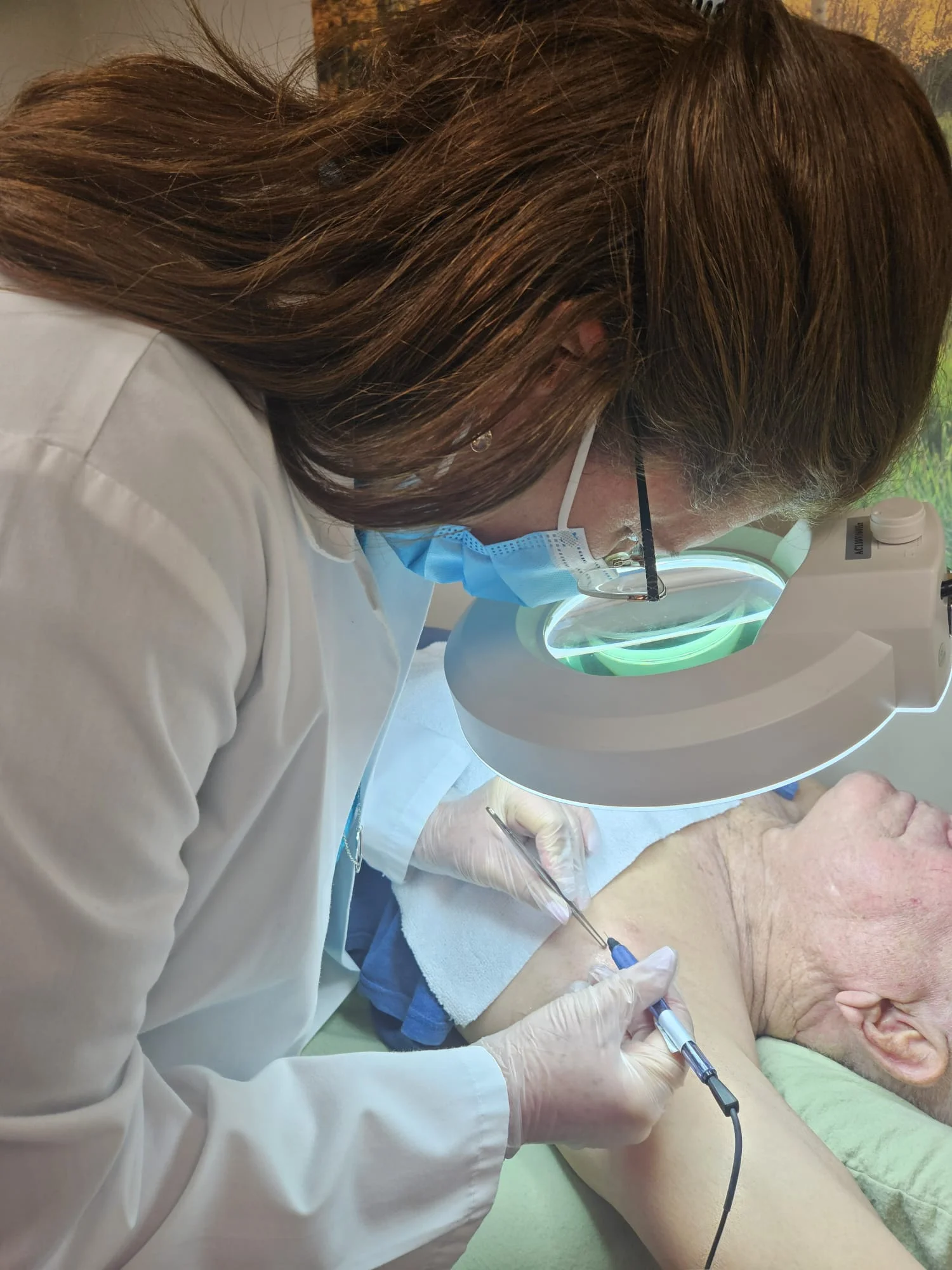
A typical milia visit runs about 20–30 minutes including the consultation. Here is what the actual extraction step looks like.
Cleaning. The area is wiped with antiseptic.
Opening. A sterile single-use lancet (a very fine needle) makes a pinpoint opening directly over the milium. Pinpoint is the right word here — this is much smaller than what would be made for, say, a stitch.
Extraction. A small loop or curette gently lifts the keratin ball out through that opening. It comes out whole, like a tiny pearl, and the cyst wall comes with it. That is why the bump you came in for goes away rather than refilling. Healing and recurrence still vary from person to person, and if you are prone to milia new ones can form elsewhere over time.
Closing. No stitches are needed. A small dab of antiseptic, sometimes a small piece of tape if you’re in an area that creases. That’s it.
Most clients have anywhere from one to fifteen milia removed in a single session. Larger groups, or milia very close to the eye, can be split across visits — we’d rather be careful than fast.
You walk out. You can wear makeup again after about 24 hours. There is no downtime, no medical leave, no scar in most cases. Tiny pinpoint marks may be faintly visible for a few days and then settle.
Milia under the eyes and on the eyelids
The under-eye area is where most people first notice them, and there is a reason for that.
The skin around the eye is the thinnest on the face and it handles rich products poorly. Heavy eye creams, occlusive sunscreens and recovery balms are all applied there deliberately, and all of them can plug the tiny ducts involved. When adults get a fresh crop of milia, a product change in the previous three to six months is a common thread — often a product bought specifically to look after that area.
Two practical notes for this location:
- Do not try to extract these yourself. Anywhere else on the face, a bad home attempt costs you a scar. Next to the eye it can cost you more than that. The eyelid margin is a hard no.
- Not everything white near your eye is a milium. Xanthelasma is flat and yellowish and sits at the inner corners, and it is a cholesterol deposit worth mentioning to your family doctor. Styes are tender and infected. Both need a different response.
We do treat milia on the outer eyelid skin and under-eye area when they are clearly away from the lash line, and we work in smaller batches there than we would on a cheekbone. Anything on or near the eyelid margin we send to a licensed physician or eye-care professional instead. There is more on that boundary in our guide to bumps on the eyelid.
How to tell milia apart from other bumps
This is worth checking before booking, because we treat milia specifically — not every white bump is one.
- Whitehead: Has an obvious opening. Often appears in a single eruption, comes and goes within a couple of weeks. Responds to acne treatments.
- Sebaceous hyperplasia: Yellowish bumps, often with a small dimple in the middle, more common on the forehead and nose. Different texture, different treatment.
- Closed comedones: Small flesh-coloured bumps that don’t have the white centre of a milium. Acne-adjacent. Respond to retinoids over time.
- Syringomas: Soft, flesh-coloured bumps under the eyes. Look similar at a distance but feel different on touch. Treated differently.
- Milia: White or yellowish-white, firm to the touch, no central opening, persistent. Sometimes appear in clusters.
If you are not sure, say so when you book. We will look at the bumps in person and tell you whether they appear suitable for extraction. We do not diagnose skin conditions, so anything uncertain, changing or unlike your other spots goes to a licensed physician or dermatologist first.
Why this is so oddly hard to get done
The same reason that applies to skin tag removal applies here: OHIP doesn’t fund cosmetic milia removal because there is no medical risk. Your family doctor will tell you, correctly, that milia are benign. Most won’t have the tools or the time to remove them even if they wanted to. Dermatologists in Hamilton can do it but typically have months-long waitlists and book it as a same-day add-on during a larger appointment.
That is the gap a clinic like ours fills. You can book a single appointment specifically for this, walk in, walk out, and be done. It is the boring, practical version of skincare — not a luxury treatment, just a small thing that should have been easy to do all along. For what it costs and why coverage works the way it does, see our cost and OHIP guide.
If you have milia you’ve been ignoring for years, book a milia consultation or message us on WhatsApp with a photo and the area. Most people are surprised by how quick the visit is.
Services that fit this topic
Frequently Asked Questions
Are milia the same as whiteheads?
No. A whitehead is a clogged pore with an opening — you can squeeze a whitehead because there's a path out. A milium is a closed cyst with no opening, full of trapped keratin. Squeezing it just bruises the skin. That's why store-bought spot treatments don't work on it.
Why do I keep getting them around my eyes?
Skin around the eyes is thin and uses heavier products less efficiently. Rich eye creams, occlusive sunscreens, or recovery balms can plug those tiny ducts. New milia in adults are often tied to a product change in the last 3-6 months.
Will they go away on their own?
Primary milia in newborns clear in a few weeks. Adult milia almost never resolve on their own — they can sit there for years. Removal is the only reliable way to get rid of them.
Does removal hurt?
Less than people expect. We use a fine sterile lancet to make a pinpoint opening and a small loop to lift the keratin out. Most clients say they felt a quick scratch and that was it. We can numb sensitive areas if you'd like.
Yamilet Pina and Maurin Casella are certified health coaches (IIN). This content is educational and does not replace medical advice. If you have a medical condition, please consult your healthcare provider.