Skin Tags During Pregnancy: Why They Appear, and Whether They Go Away After
Why skin tags often appear in the second and third trimester, whether they shrink after birth, what to watch for, and why most people wait until after delivery to remove them.

There is a long list of things nobody mentions before a pregnancy, and skin tags are somewhere on it.
One appears on the side of the neck around the second trimester. Then two under the arm. Then one along the bra line that catches every time you get dressed. And because so much else is changing at once, it is easy to wonder whether this one means something too.
Usually it does not. Here is why they show up, what tends to happen after birth, when skin tag removal makes sense, and the small number of things worth calling your midwife or obstetrician about.
Why pregnancy brings them on
Skin tags are benign growths of normal skin, and they are associated with a familiar list: friction, genetics, age, body weight and hormonal change.
Pregnancy pushes several of those at the same time:
- Hormones. Pregnancy is one of the largest hormonal shifts the body goes through, and it is a well-recognised trigger for skin tags.
- Weight gain. Healthy, expected, and also more skin folding against skin.
- Friction. A changing shape, a bigger bra band, thighs and underarms rubbing differently, clothing that fits tighter for a few months.
That is why they cluster in the same places they always do: the neck, underarms, under the breasts, along the bra line and in the groin. We explain the friction pattern in why skin tags show up exactly there.
Most people notice them in the second and third trimester. For a lot of people they are the first skin tags they have ever had.
Do they go away after birth?
Some do. As hormones settle over the months after delivery, some pregnancy skin tags shrink, flatten or simply become less noticeable.
Many do not. Those are just skin tags now, and they behave like any other: they stay much the same size and tend to bother you only when something catches them.
There is no way to predict in advance which yours will be. That is the main practical argument for waiting a few months postpartum before deciding anything. You may end up with fewer to deal with than you started with.
What is not a skin tag
Pregnancy brings other skin changes, and a couple of them are worth separating out.
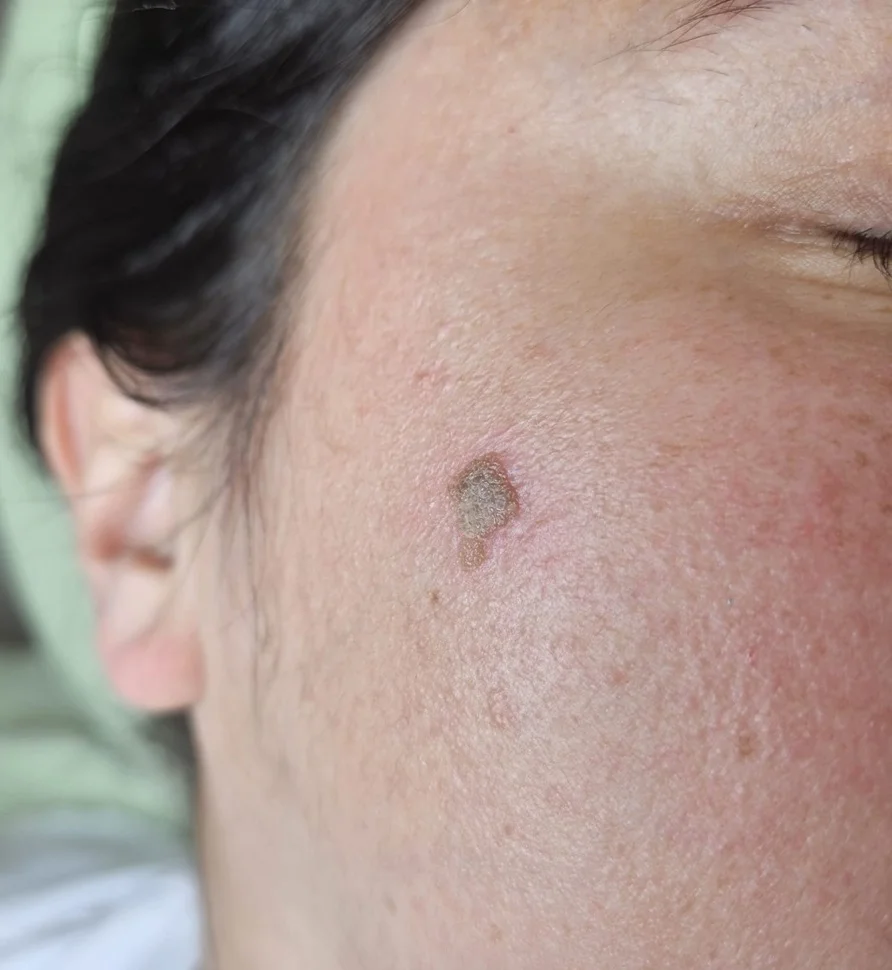
A red, fast-growing bump that bleeds easily. Pregnancy can bring on small, bright red, rapidly growing growths, often on the gums or fingers, that bleed with very little contact. They look nothing like a soft skin-coloured flap, and they should be seen by your midwife, obstetrician or family doctor rather than a cosmetic clinic.
Dark patches and lines. Darkening of the face (often called the mask of pregnancy), a dark line down the belly, darker nipples and underarms. Common, hormonal, and not something to remove.
A mole that is changing. Moles can darken a little in pregnancy. A mole that is growing, changing shape, getting irregular or bleeding should still be checked, pregnant or not.
Vicaria does not diagnose skin conditions, and we are not licensed physicians or dermatologists in Ontario. If you are not sure what a spot is, the right people to ask are the ones already looking after your pregnancy.
About gestational diabetes
You may have read that skin tags are linked to blood sugar. Outside pregnancy, having many skin tags is associated with insulin resistance, and we wrote about what that link does and does not mean.
In pregnancy, that association is not something to act on yourself. Gestational diabetes is screened with routine bloodwork, usually between 24 and 28 weeks in Ontario. That test is the answer. A skin tag is not a test for anything, and having some does not mean your result will be off.
Removing them: now or later?
Skin tag removal is elective and cosmetic. For most people the simplest and most sensible choice is to wait until after delivery, and often a few months beyond, partly because some tags shrink on their own in that time.
If one is genuinely bothering you now, catching on a bra strap or bleeding every time it is snagged:
- Ask your midwife or obstetrician first. They know your pregnancy, and they can also confirm that what you are looking at is a skin tag.
- Tell us you are pregnant on the free call. We will talk it through honestly, and if waiting is the better answer we will say so.
- Protect it in the meantime. A soft bandage over a tag that catches on a bra strap or waistband stops most of the irritation.
What we would ask you not to do is remove it yourself. Banding, cutting and drugstore freeze pens carry the same risks of bleeding, infection and scarring in pregnancy as at any other time, and you have enough going on. We go through what each home kit actually does.
When you are ready
Vicaria offers cosmetic skin tag removal at Unit 2B, 144 James St S in downtown Hamilton, serving Ancaster, Dundas, Stoney Creek, Waterdown, Burlington and Grimsby.
- Free 15-minute phone or WhatsApp consultation
- In-person consultation: $60 CAD + tax
- Treatment: from $20 CAD + tax per lesion, by size and location
Pregnancy tags usually come in a group, and several in one area are generally handled in one appointment with the consultation fee charged once.
Call (365) 336-9757 or message us on WhatsApp.
Important: a fast-growing, bleeding, painful, dark, irregular or changing spot during or after pregnancy should be assessed by your midwife, obstetrician, family doctor or a dermatologist before any cosmetic removal.
Services that fit this topic
Frequently Asked Questions
Why do skin tags appear during pregnancy?
Pregnancy brings together several things associated with skin tags at once: large hormonal shifts, weight gain, and more skin-on-skin friction as the body changes shape. They most often show up in the second and third trimester, in the usual friction areas: the neck, underarms, under the breasts, along the bra line and in the groin.
Will my pregnancy skin tags go away after I give birth?
Some do. A number of pregnancy skin tags shrink or become less noticeable in the months after delivery as hormones settle. Many do not, and those behave like any other skin tag. Waiting a few months postpartum before deciding on removal lets you see which group yours are in.
Can I have a skin tag removed while pregnant?
Skin tag removal is elective and cosmetic, so for most people the simplest choice is to wait until after delivery. If one is catching, bleeding when snagged or bothering you enough that you want it gone now, ask your midwife or obstetrician first and tell us you are pregnant on the free call.
Are skin tags in pregnancy a sign of gestational diabetes?
Not on their own. Outside pregnancy, multiple skin tags are associated with insulin resistance, but a skin tag is not a test for anything. Gestational diabetes is checked with routine bloodwork, usually between 24 and 28 weeks in Ontario, and that test is the answer, not your skin.
What about while breastfeeding?
Ask whoever is looking after your postpartum care, and tell us on the free call. Many people choose to wait until their routine has settled anyway, partly because pregnancy tags sometimes shrink in that time.
Yamilet Pina and Maurin Casella are certified health coaches (IIN). This content is educational and does not replace medical advice. If you have a medical condition, please consult your healthcare provider.